


“There’s a slow, slow train comin’ up around the bend.”
So goes the Flanders and Swann track, lamenting the decline of Britain’s railways as the Beeching Cuts irreversibly changed our infrastructural landscape. Indeed, the Low-Speed Rail 2 project seems a thing of perpetuity, announced when I was a child, knocking down my council block as a teenager, now as an adult cutting a sizeable chunk out of my wages through my tax bill. I’ll be 40 by the time it takes its first passengers. HS2 seems to be this immovable burden that tells the story of mine and many other young Londoners’ lives, and immovable is the last thing you want a train to be. Unless, of course, you’re the RMT, who have reluctantly postponed the May strikes this week to carry on negotiations with TfL over proposals to change drivers’ working hours (reported on in INDEX 2). I’m fortunate to be in a union that can muster a sense of professionalism and organisational ability that the state and capital evidently lack. In all honesty, I’m fortunate to have a job at all. Unemployment is a sticky thing, and it’s really going to hurt this summer when the price spikes arrive to check tickets. My bag is packed and I’ve stocked up on Murray mints, coffee, and Cornish pasties. Feeling my pockets, searching through my luggage, double-checking that I’m ready for that not-so-slow train rattlin’ early ‘round the bend.
— S.E.P.
The Criminal Enterprise of HS2
The Department for Transport this week announced yet more bad news for the ill-fated High-Speed Rail 2 project, which first broke ground in 2011. After several delays, scope reductions, and spiralling costs under the Conservative administration, Labour’s Transport Secretary Heidi Alexander has now announced that the project will cost double the original estimates for the national network (now reduced to a single line between London and Birmingham), and extended its deadline yet again, now all the way to 2040. On top of this, the actual speed of the ‘high-speed rail’ project has been reduced, with cheaper locomotives procured that cut 40km/h off the initially expected travel speed.
The story of HS2 has been one of continuous failure, and a key demonstration of the incapacity of the modern British state. What in Europe costs a fraction of the price and time has in the UK become one of the most expensive infrastructure projects of the 21st century. As Alexander rightly pointed out: “If we were a country the size of China, I could understand, but we are not.” However, this is more than a question of geography, it is a question of the size of the state as well.
The biggest hurdles for HS2 have been contract spending. Almost 100% of the long-term downside risk for the project was placed on HS2 Ltd (quango), rather than the contractors actually responsible for delivery. This gave private contractors free reign to chase short-term construction schedules which allowed for juggling multiple contracts at once, with engineering problems or unaccounted difficulties paid for by HS2 Ltd, not the contractors themselves. Mark Wild, who took over the project as part of the government’s latest reset, outlined how this led to civil contractors pouring concrete and tunneling before local planning consents were secured and engineering blueprints completed, leading to design changes mid-way through construction to satisfy local regulations that forced construction to stop, and £26bn spent on contractors sitting idle or being forced to alter half-built structures.
It is also a point that, when George Osborne launched the project in 2011, the scale of expectation was incredibly ambitious. With the backdrop of the oncoming 2012 Olympics off the back of Beijing 2008, and growing geopolitical dialogue between the UK and China, HS2 was intended to outperform every standard European high-speed line with faster units, extreme track specifications for maximal speed, and a range of custom components that had to be designed. Had the project been limited to a European model, it likely would be completed by now. This is what the present government is now deciding to do.
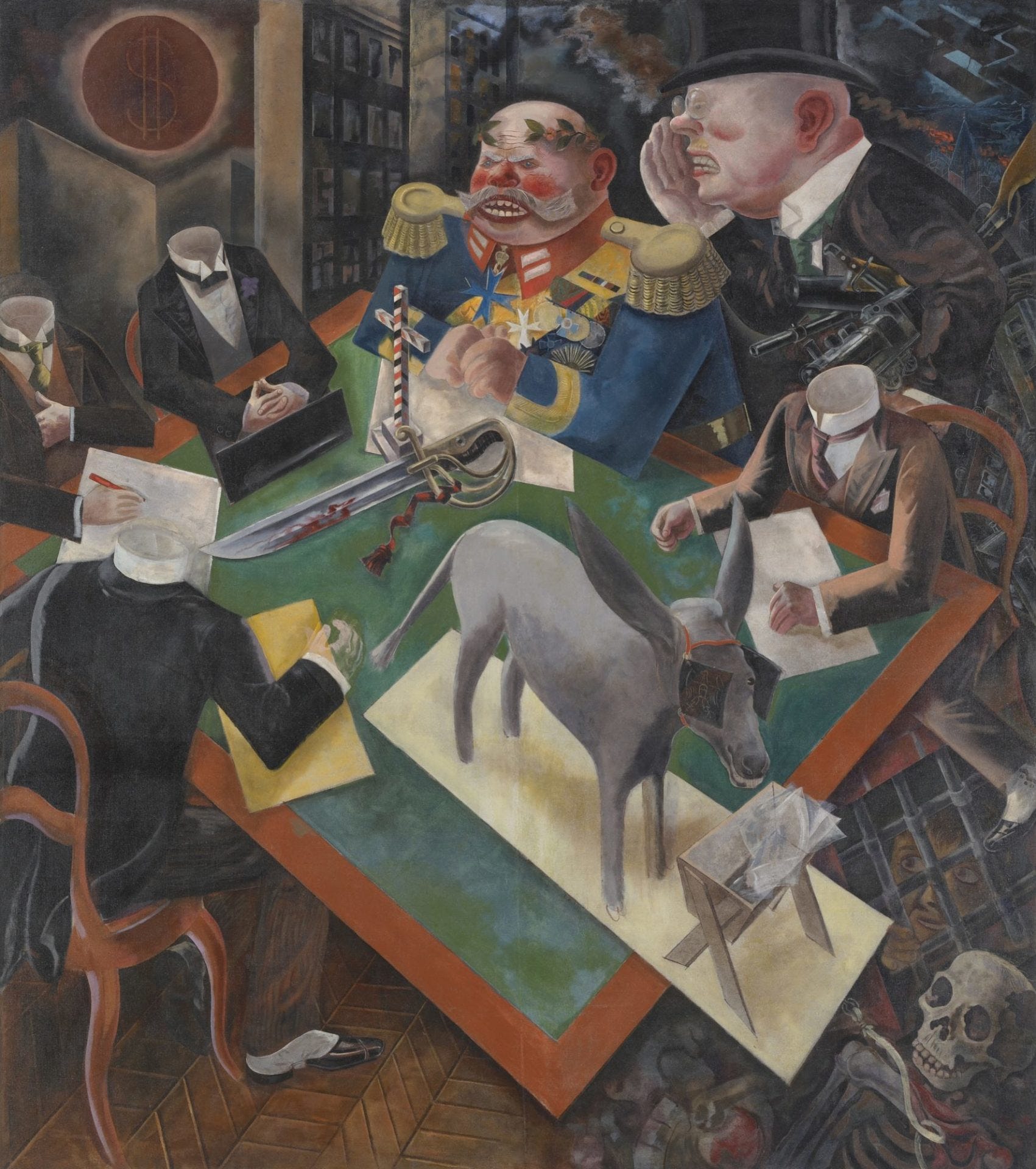
The failures around HS2 reek of corruption at every level, with contractors awarded billions due to apparent negligence in state planning, and a contract system specifically designed to allow contractors financial immunity. In INDEX 5 we discussed the contratto di rete, an Italian contract form that has proven successful in delivering broad, multi-stakeholder infrastructure projects through transparency, mutualised risk, and clear communication. None of this was present in the contract model agreed for HS2 Ltd., which, despite the reduction of the project’s overall scale and ambition, remains the model after Alexander’s ‘reset’.
The failure of HS2 brings the facade of London’s financial splendour to bear with the physical reality often discussed in the INDEX. The country is a corrupt, poor, and incompetent place where an asset-deprived state exists merely to funnel public funds into private hands. We have spoken on this with regard Ed Miliband’s energy policy in INDEX 1, that state policy has been set up to nationalise risk as much as possible to permit for the continuation of ever-more fickle profit margins. Where the state does nationalise, the form of ‘nationalisation’ takes on the same character (see outsourcing on the newly-nationalised railways, PFIs in the NHS, and so on). This has been state policy since the 1990s, and there is no escape route. International markets and central banks operate explicitly on this framework, meaning that any attempt to change course on a state-level will cause runs on the pound and skyrocketing gilt yields. It is becoming increasingly apparent, given the paltry options available to the British electorate, that the only viable means of exiting this arrangement will have to come from outside normal channels.
The Non-Return of Supermarket Price Caps

The Treasury has made remarkable headlines this week in a botched attempt to introduce price caps for supermarkets, as nerves grow for the incoming price spike ready to hit essential consumer goods. Retailers immediately rejected the proposals, with the M&S boss calling the idea “madness”, before the Treasury quickly retreated with its tail between its legs.
This 1970s throwback comes at an odd time, as headlines also highlighted fairly positive growth figures for the UK this week, beating expectations and even seeing a drop in inflation. A smiley Keir Starmer, desperate to appear more human as the Mayor of Manchester trapses along in his slow jog to Westminster, noted that he was “very pleased” that migration was down, ‘the economy’ was up, and waiting lists had been cut. A seemingly good week for the government – so why was Rachel Reeves caught trying to shoplift from Tesco?
Anxieties are growing about the price spike discussed in INDEX 5. Since then, the timeframe has been compressed due to poor ONS figures on Wednesday, ironically a product of the deflation the Prime Minister was celebrating in Downing Street. What was a Q4 expectation is now being adjusted to Q3, with the Treasury rightly terrified that an unprepared consumer market will turn around and blame them when chicken breasts start going for £10 a pop. Retailers rejected the proposals on grounds of profitability, expectedly, and lambasted the perceived assault on market orthodoxy.
Price caps are fickle things. They may keep consumers ‘happy’ for the period they are implemented, but prices will eventually rise elsewhere to compensate. The Treasury allegedly offered to lift certain regulations in exchange for voluntary price capping, indicative of a skittish and unconfident approach. They truly have no clue what to do.
Full Unemployment In Our Lifetime?

In other good news, unemployment has risen to 5% this week as businesses struggle to meet the increasing cost of material logistics, energy, and increased taxation. The labour market has been particularly poor in recent months as profit margins are squeezed and labour intensity reaches regulatory limits. An astonishing 16.2% of all young people are now unemployed, the majority out of education. As ever, yet another consequence of the falling rate of profit in this country is being subsidised by the state, welfare checks issued to keep consumer markets happy whilst they fire all their staff.
No wonder the Treasury is panicking as the Q3 deadline looms, because no one in the private sector is willing to shoulder the blow to increase wages to any reasonable level, putting the government in the tight spot of having to try and pay for it themselves. Social democracy is on the ropes, with every month seeing the British state dig deeper and deeper into its fiscal hole, before being told the plans have changed and they’re compelled to undergo yet another ‘reset’. It may very well be that the country is ungovernable, its citizens unemployable, its foodstuffs unaffordable, and there’s no light at the end of the tunnel (as an aside, even in instances where employment does rise, the pervasive condition of ‘virtual unemployment’ through the preponderance of non-value-generating labour, the ballooning of socially unnecessary labour time, means that even short or medium term stems to the decline in employment can’t sufficiently halt the free-fall tendency of the decline in value-generating work overall. Here, the prospect for radically distinct approaches to ‘employment’ and ‘productivity’ may commence, however such conservations amongst people who might be able to address such problems remain unlikely).
Bank of England Announces Debt Gadget

The Bank of England this week finally announced the rollout of a new bond issue format: the crypto-bond they are calling DIGIT (Digital Gilt Instrument), which will be the first of its kind in global monetary instruments. They are perhaps getting ready to streamline their sovereign debt issuance capacity to ‘sell, sell, sell’ in preparation for the oncoming shock.
That the BoE is capable of putting together an admittedly impressive technological feat for the sake of debt issuance is a picture in itself. Where in the UK laying tracks and building tunnels spirals into disastrous incompetence, the technology of owing people money is ahead of any other country in the world. One only wonders what we could achieve if instead of using this technology for credit signals, we instead used it for material signals in the macro-economy, say, to help coordinate stakeholder timelines for infrastructure delivery; ‘Give us your gismo you pillock, you’ve been trying to dial the number for Samaritans on the calculator app for hours now. That’s it, you hand it over and jump down there. Should be here soon.’
INDEX Verdict
We need to demand a full investigation into where state funds have gone over the course of HS2. We need to ensure that corrupt politicians and contractors are held to account, and we need to make the argument for a complete overhaul of UK contract law to bring in a system that is transparent, inclusive, and flexible. We would like to see the organisation of a people’s campaign for these demands. In the railway industry, when a worker is involved in a disciplinary incident, they are forced to fill out a ‘Please Explain’ form. We demand this of HS2 Ltd. and its contractors:
Please Explain.