


I work a manual night job. Pulling heavy machinery around large warehouses and engineering sheds out into the cold as the Moon watches over me. It’s referred to in popular culture as the ‘graveyard shift’. But I can’t help but feel the opposite is true. Keeping machinery operational in the only hours that work can be done is a form of nurture for the real economy. My colleagues decked in boots and high-vis jackets laugh and shout and complain through the early hours of the morning, keeping vital infrastructure alive, ready for the trials of the next day. Each night I see a bed of life, which is more than can be said for the acceptable hours of modern labour, that vaunted 9 to 5. There you find all the stench and anxiety of a sickness spreading ‘industry’ to ‘industry’, picked up off rats in the financial sewage system. Wages stagnant; jobs in freefall; high streets in ruin; banks all nauseated… I think the ‘graveyard shift’ is much more accurate for the 9 to 5 than the night shift. All of my labour is still alive. But I do worry about the ghosts of the day that haunt the supermarket shelves, the rent prices, the energy bills. I worry that the dying dictate the conditions of the living.
This week’s INDEX unravels the death by proxy currently ravaging global markets, and soon to ravage our wage packets. The closure of the Strait of Hormuz seems to have no end in sight, as aluminium, mineral, and plastic shortages have started to see the crisis expand beyond just oil prices. Here in the UK, 30-year Gilt yields spiked to levels not seen since 1998 as bondholders brace for the inflationary consequences of the UK’s unpreparedness for financial shock. Reverberations are already being seen in the increasing strain on labour markets and commodity prices, from the titans of UK finance right down to the local newsagent. And local elections prove that the country has lost its political centre, as politicians on the right and left seek to capitalise on almost two decades of market paralysis, state failure, and national decline.
— S.E.P.
Aluminium Shortages & Geopolitical Realignment
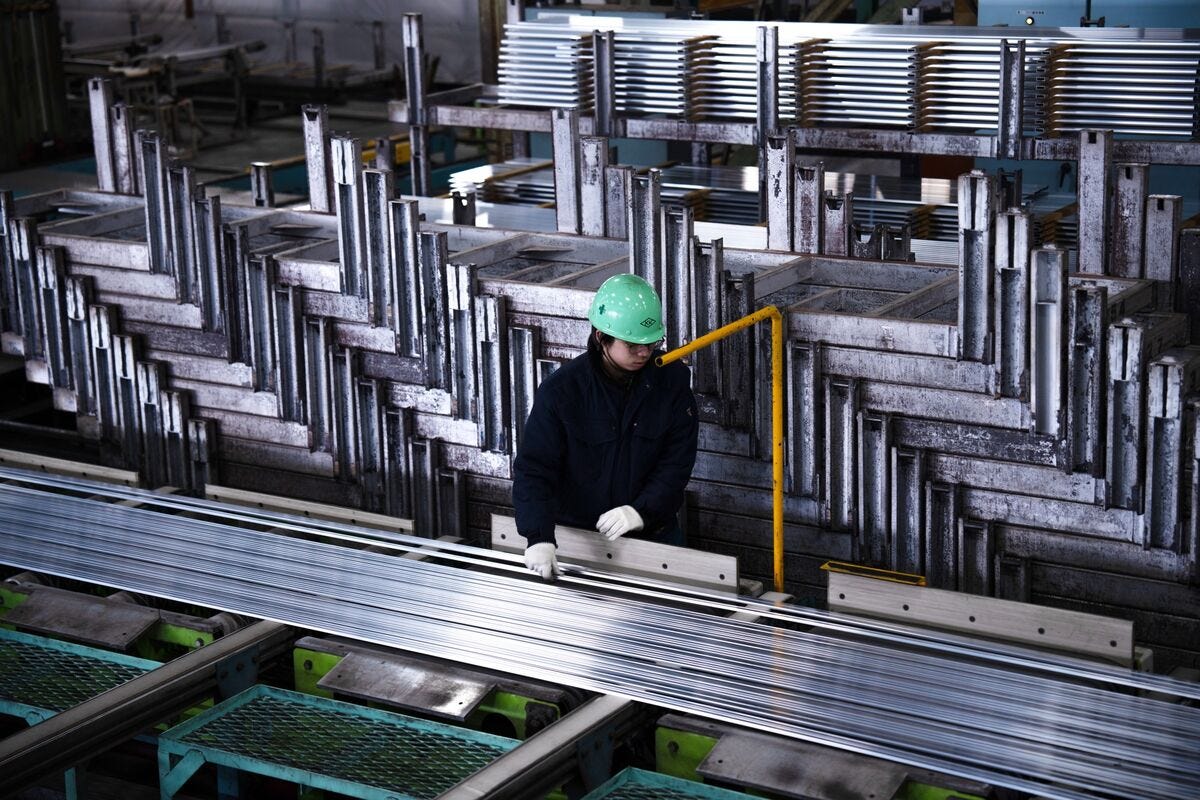
The conflict in Iran and closure of the Strait of Hormuz is having disastrous effects on global aluminium supply. With the vital shipping chokepoint still closed, stockpiles in Europe and North America are drying up, as aluminium makes up a vital component of circuit boards and heat sinks necessary for data centre development. On top of aluminium shipping routes, the Middle East itself is a major aluminium producer, responsible for about 9% of global production; however, the inability to import raw materials on top of bomb damage to critical capacity infrastructure has reduced output in some cases to as little as 30% capacity. Assuming the war were to end today, it would still take over a year for the industry to return to full capacity, a disturbing fact for AI stakeholders and developers, putting yet more stress on a financial bubble appearing to reach its absolute limit.
Aluminium shortages will affect more than just speculative finance, being a vital component in almost every area of the modern consumer market. Housebuilding aluminium markets have now hit a four-year high, piling greater costs on the already gargantuan price of housing development the UK government is desperately trying to offset. Consumer analysts predict a 10-15% increase in the retail price of canned drinks by this summer alone, not counting the reduced size of canned goods overall as producers attempt to cut packaging costs. A 20-25% increase in the cost of medicinal packaging is also anticipated, with preemptive jumps in the price of aspirin products skyrocketing from a pre-war price of 38p to £7.00 in some regions. This will hit the already embittered NHS hard, as well as increase the dependency of patients on medical welfare to afford basic prescriptions. It will hit workers hardest, as job markets dry up, wages drop, and prices for basic essentials like toothpaste and tinned food eat up greater and greater percentages of already pre-spent wage packets.
Meanwhile, China is largely insulated from these supply chain issues due to a high level of domestic production, but the trade barriers set up between the West and China, especially in the midst of Donald Trump’s trade war with the country, have rendered aluminium imports from China no better than the clogged Middle East in terms of logistics. Other East Asian countries, however, like South Korea, Japan, and Taiwan, are being deeply hurt by these materials shortages, as well as the global inflationary spiral incurred by oil price spikes, perhaps providing an explanation as to why these traditional Western allies have begun looking to Russia for a solution.
Russia has a monopoly over the Northern Sea Route (NSR), the shortest possible sea route between Asia and Europe, situated across the circumference of the Arctic. The Russian government has recently deployed a tremendous amount of state investment to make the route more feasible for large-scale transport. At present, the route is largely frozen over for 7 months of the year, but the effects of climate change and the development of Russia’s nuclear-powered icebreaker fleet, Arktika – the most powerful icebreaking ships in the world – have garnered the attention of investors from China, South Korea, and Japan, who all seem to be considering a potential workaround for a long-term blockage in the Strait of Hormuz. The question for us in the West is whether geologistical necessity is enough to force geopolitical realignment, with the EU recently committing to a new €90bn loan to Ukraine to support its war effort, putting further strain on any near-term rapprochement between Russia and the bloc.
UK Govt Borrowing Costs Hit 28-Year High

UK 30-year Gilt yields hit a 28-year high on Tuesday, as markets braced for supply chain shortages and growing political instability after the May 7th local elections. Gilt yields dictate the cost of borrowing for the British state, reflecting bondholder confidence in the government's ability to service national debts. The spike this week demonstrates how short-lived the Labour Party’s honeymoon period has been after implementing its ‘securonomics’ strategy last year.
Gilt yields are more than just an interest rate for government borrowing, in real terms they are hard limits on state investment capacity, and therefore on overall state sovereignty. The tragedy is that in spite of Rachel Reeves’ expert pandering to the bond markets in her fiscal policy, the material consequences of US militarism have stopped her dead – as she allegedly made clear to her American counterparts this week. This is not so much a failure of economic policy, nor a consequence of poor political oversight, as much as Labour’s political opponents would stress it is. The local elections have acted merely as an acute pressure point on economic prospects already deep under water, and all that pressure has to go somewhere eventually.
What this does mean is that taxpayer money will now have even shorter reach (ironically necessitating higher borrowing) as a 5.77% bulk heads straight out of the Treasury coffers and into creditors’ pockets.
The Inescapable Collapse in Profitability

In INDEX 1 we discussed some of the undeniable data produced by Sydney University on long-term global declines in profitability. Some of that data revealed that in 2026 we have reached levels of profitability akin to those being accrued during the COVID-19 lockdowns. This is beginning to have a visible effect on all levels of the British economy.
The Big Four finance giants – EY, KPMG, Deloitte, and PwC – have long been exalted for their role in maintaining the edifice of British economic prowess, the main operators in the cash-flow engine of the City of London. In a post-industrial Britain, these have been the ground upon which the country’s economic fortunes have rested. However, the internal mechanisms of these ‘titans of prosperity’ are starting to rust. Equity partnership is the key ambition for most who work for these companies, a status akin to shareholder power, where one works and owns a share of the firm. It is seen as being at (or at the very least near) the top of the ladder, and something that is effectively irreversible once allocated. Over the course of the COVID-19 pandemic, financial service demand skyrocketed, leading to a tremendously optimistic employment intake at these firms with a great many admissions to equity partnership.
Now, as the brief sugar-rush of the post-pandemic recovery subsides, these firms are having to cut equity partnership admissions. This has caused issues for the talent pool, as younger financiers grow increasingly wary of a crowded upper floor and lack of progression potential. To compensate, firms like EY have begun to introduce non-equity partnership and management positions to simulate career progression while not offering the substantial economic power most in the industry strive for. For all the talk of ‘re-proletarianisation’ from the left, it appears that capitalism is doing the job itself just fine.
This is on top of hundreds of jobs being cut in financial middle management, around 600 at KPMG alone. It is hoped these cuts in labour costs will shore up profits, and the potential has been facilitated by the first major rollouts of AI systems for administrative tasks. These young prospective graduates brought in en masse after COVID are now expecting to be back out on the streets, graduation caps in hand.
They will find a high street of rapidly diminishing opportunity. The atmospheric pressure of financial capital is thick here. Pubs are suffering terribly, with one closed every hour. The price of a pint in London is now said to have reached £10 in some parts of the city. To survive, many are having to strip themselves of historical baggage to cater to a smaller, paying consumer base of those who happen to survive in the flighty airs of income-earning. TG Jones has closed. Remember TG Jones? No, it's unlikely you do. TG Jones is the legally safe imaginary name given to the high street units formerly known as WHSmith, who sold their more than 150 branches to speculative giant Modella Capital as they shift focus to railway stations and airports. Modella have announced that they will be closing all the remaining TG Jones stores this year as sales fail to meet expectations. And of course the high street familiar TSB, one of the longest operating British high street banks, has now been absorbed into Santander, its brand to be ditched by the wayside as the remarkable growth of Spanish capital starts to take its revenge on an exploitative British tourism industry.
A common complaint from pubs to high street vendors is the weight of government-imposed business tax, and indeed business taxes now are strong limitations on the potential for many companies to survive in the long-term. But the overall picture is ultimately still one of declining profits and business capacity seen across all rungs of the British capital ladder. High business taxation is one of the last remits of a state desperate to keep itself afloat as the British economy sinks deeper and deeper, and the investment supposed to be flooding in without these taxes is hardly likely to rescue it from the vortex of declining profits the world over.
2026 Elections: Decentralisation/Recentralisation
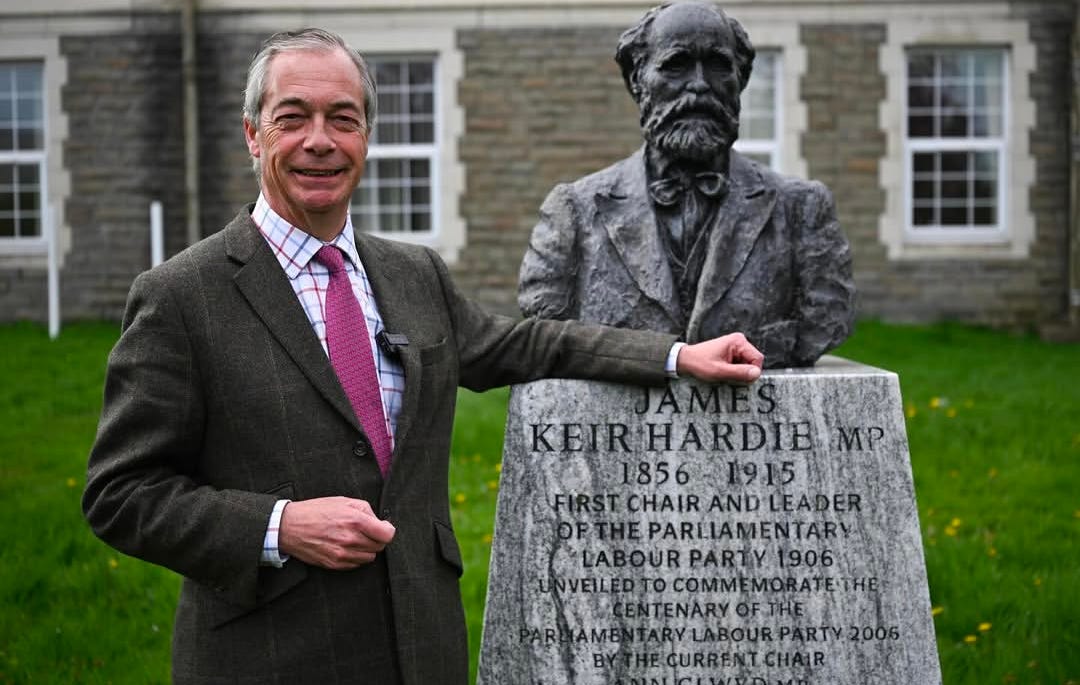
Local and devolved elections held across the UK on Thursday have revealed the deep-seated restlessness of the British electorate, as the traditional duopoly is tossed out. The results convey a desperate need for an improvement in conditions. The very concept of continuity, in whatever form it takes, has been consistently and rapaciously protested against since 2016, after the effects of the 2008 financial crisis proved more enduring than expectation.
The country is searching for a new centre. In the devolved parliaments, that centre seems to be heavily insular. For the first time since devolution, all the devolved parliaments in the UK are now majorly composed of national-separatist parties, after Plaid Cymru did away with 70+ years of continuous Labour governance. Although the SNP failed to secure the majority needed to warrant calls for a second referendum in Scotland, evidently the future of the union is at greater stake now than at any time in its history. Meanwhile the Labour-Conservative duopoly has been resolutely discarded with the surge in support for Reform UK and the Greens.
What should we make of this? Most analysts will have seen this coming; I would pinpoint it with the failure of the Boris Johnson moment in Conservative politics, which saw a hugely popular prime minister ousted by a political elite followed by a disastrous interregnum and then a cautious operation under Sunak which the Labour Party has had no choice but to follow. As we have made clear here and elsewhere, government is a poison chalice for any party. The British state has been so thoroughly dismantled and outsourced to the point of near-total incapacity, with even the slightest change in direction triggering rapid economic reverberations which threaten to tear apart the edifice of the state entirely. The political settlement has, since the 1980s, been hanging in a web of fragile mythic confidence in the City of London’s financial service sector. The scam has been played for so long that even the slightest attempt to reconcile with the immense material challenges facing the country are responded to with the panic of an existential crisis that bondholders and financiers are not ready to deal with. This continued skittishness will afflict any pretender to change. Even Reform’s neoliberal prestige has been recognised as a spook to investors, now uncertain the old formulas for growth can work in an unstable supply-side environment. To invert the adage, the problem with ‘neoliberalism’ is that you eventually run out of assets to strip. A repetition of Thatcherism today can’t yield the returns once available when a thirty-odd year base of state-owned, state-built enterprises and infrastructure were there for the stripping.
INDEX Verdict
Consider stockpiling non-perishables and medicines. Beware of simple party-political fixes. Join your relevant trade union. Avoid aspirations towards middle management or admin. Embrace labour and leisure.