


This week:
Trump signs ‘Memorandum of Understanding’ with Iran; oil markets loosen up; Cuban economy ‘opens’.
The Royal Navy faces off against Russia in the English Channel; Burnham wins Makerfield by-election to launch a challenge against Starmer.
EU sovereign AI schemes advance as the UK falls behind.
Labelled drone data from Ukraine implemented in latest US military models.
The World Cup has been a joy so far this week. Though the games are being shown quite late at night to early in the morning here in the UK, as a night worker with a TV in the mess room, I’ve not missed a thing. It’s a shame England hasn’t got the same energy on the world stage as it does on the pitch, but alas, China has only qualified once for the tournament and never scored a goal (if football reflected geopolitics we’d be living in a very strange world indeed; Buenos Aires for New York, Madrid for Beijing).
No, England appears caught, circling a drain of ineptitude and incapacity, entering the peak of a vortex it cannot escape, the consequences of decisions made during the Second World War finally revealing themselves for what they were: the complete selling off of national sovereignty to the United States of America. Ultimately, we would likely enjoy more rights and greater prosperity were the Americans to call a dog a dog, and formally designate us their 51st State.
Sitting ducks in the Atlantic pond we are, target practice for Russia, a laughing stock to Europe, and a thorn in the side of America, the last major contribution we have being R&D and finance itself increasingly sapped away by the rapid advancements in technology and capital management being made on the mainland. Same goes for the socialist movement, that which seeks nothing less than the full sovereignty of the working class, which have become, in Britain, nothing but a tiny moment of a global network of logisticians and engineers dictating the movement of goods and credit, and who, acting on their own, are like flies in a cobweb.
I suppose I can enjoy the idea of sovereignty though, the last dying days of the nation state, in the beautiful game. Off to America to bring football home. Why not, for old time’s sake?
— S.E.P.
Open Strait, Open Cuba?
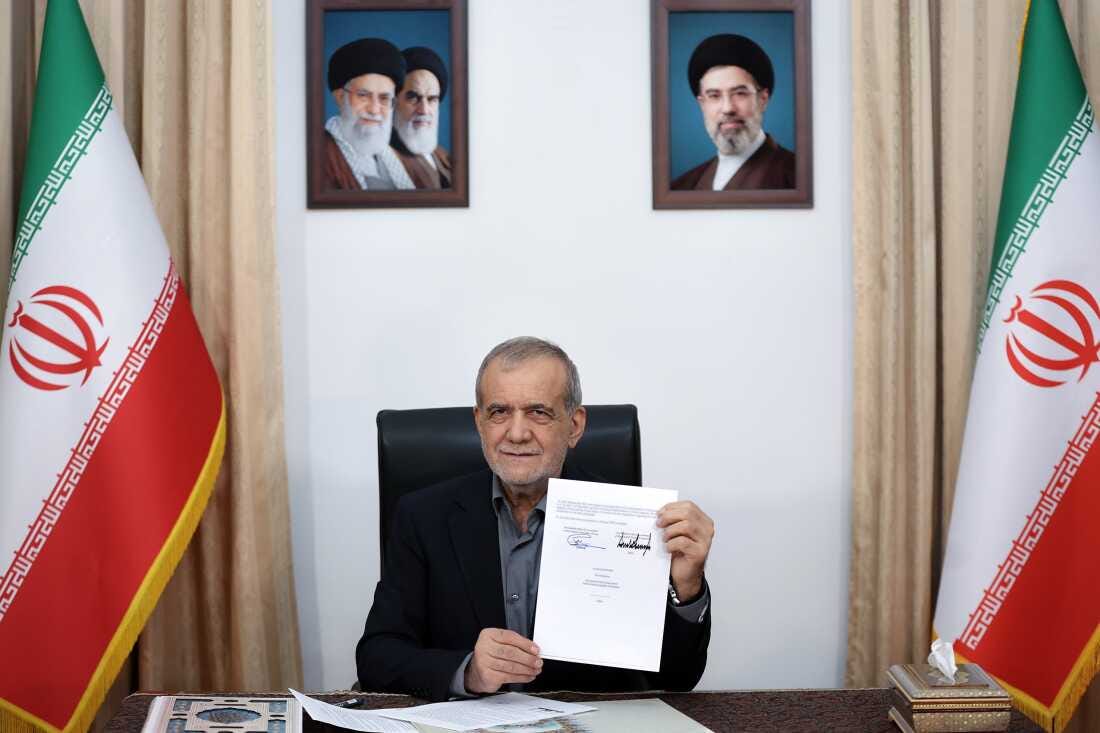
Another historic treaty was signed at the Palace of Versailles this week as President Donald Trump finally called it quits on the Iran War. Months of practical stalemate in the region seemed to yield few results for the Americans, as the ad-hoc Memorandum of Understanding (MoU) gave shape to a set of American demands that had been unclear from the start of the engagement. Under the new MoU, which is more a framework for a peace timeline than an immediately actionable treaty, Iran will be expected to permit traffic through the Strait of Hormuz once again, whilst committing to down-blend its stockpile of enriched uranium under International Atomic Energy Agency supervision. In return, the United States will remove all blockade on the country, cease all hostilities (including on the Lebanese front) and commit to lifting several sanctions on Iranian funds, oil exports, and domestic manufacturing, on top of a $300bn ‘reconstruction and development’ plan to help rebuild infrastructure damaged during the course of the war.
At the start of the war hopes were high that American intervention would be the last ingredient necessary for a full-blown revolution in Iran, which would see an antagonistic government overthrown without the need for any American boots on the ground. Instead, the war appears to have come to an end with more concessions from America than the emboldened Islamic Republic. Indeed, one of the more explicit end-states floated by the ‘Department of War’ midway through the conflict was the complete disablement of not just Iran’s nuclear capacity, but ballistic missile capacity altogether. At the signing of the agreement, the President stated it was ‘OK’ for Iran to keep its ballistic missiles, and even unfair of the US to demand basic defence capabilities be stripped from a country.
Whilst oil markets breathed a sigh of relief on the news that the Strait of Hormuz would be opened and sanctions on Iran lifted, an oil glut is not expected anytime soon. The CEO of Japan’s Mitsui OSK Lines stressed that it could take up to a month for transit to return to full capacity through the Strait, with many operators hesitant to act on what may prove to be a fragile agreement. Despite the MoU setting out commitments to end hostilities in Lebanon, the IDF continues to bombard the country and occupy its southern territories, and without Israeli participation in the talks that led up to the agreement, it is unclear whether the US will be able to rein in its partner in order to permit for a long-term cessation of hostilities. On the day of Trump’s visit to Versailles, Israel proceeded with further strikes on the Lebanese capital, leading top Iranian negotiators to postpone their visit to Switzerland for furthering the outcomes of the MoU indefinitely.
If all goes according to the MoU framework, oil prices are expected to plummet in 2027 as OPEC+ and non-OPEC production ramps up and demand drops. Prices are not, however, expected to return to their pre-war levels of sub-$70 p/b. Markets have been made more aware of chokepoint dependencies in general, which have raised the premiums on insurance and transport. Stockpiles are severely depleted worldwide, meaning that despite a drop in demand expected in 2027, overall demand will remain elevated for a prolonged period. This on top of increased geopolitical stockpiling in fear of another incident of this type, on top of global inflation exacerbated by the conflict, make the damage done to the global economy irreversible. Food prices are still expected to spike around Q3/4 (see INDEX 6), and real wages depreciate significantly in the run up to Christmas.
Disaster for the United States? Growing signs of a dying empire? Perhaps. But despite the somewhat embarrassing retreat from the Middle East, Trump can at least boast success in the Americas, where pressure on socialist Cuba has forced the government into unleashing a series of liberalisation reforms that had been strongly resisted for decades by the Cuban Communist Party. With Trump’s eyes off of Iran, many on the world stage will be fearing where he casts his gaze to next, and it would appear that President Miguel Diaz-Canel has responded preemptively to the mounting pressure being placed on the island.
The reforms involve the introduction of various private equity and capital incentives, the legalisation of large private firms and public-private initiatives, and the opening up for demutualisation of Cuban agriculture, in the hopes that this will relieve the immense amounts of pressure being placed on Cuban fuel imports by the United States, as well as stimulate the economy to prevent unrest at home. 20 of the 24 hours of the day in Cuba are now spent in blackouts, currency markets are in near-total collapse, and domestic agriculture is paralysed by exports and cash-crop production (an economy almost entirely dependent on sugar and tobacco exports). Part of the liberalisation efforts will see a transition away from the long-held libreta system, where food distribution has been rationed by the state, with rations failing to meet caloric requirements for more than 30 years, and facing a practical cessation of all functionality from 2024 as black markets have come to overwhelm rationing capacity.
The Cuban government claims that the reforms are intended to ‘protect’ Cuban socialism, in imitation of the models seen in China and Vietnam. However, Chinese economists reflecting on the transition China made in the 1990s towards significant opening up stress that the global environment that made that a success for Chinese socialism is no longer present, with a Cuba facing economic collapse, political pressure, an ageing workforce, and no industrial core attempting to open itself up to a heavily inflated, war-weary, and volatile global market. Whilst J.D. Vance and Trump have floated the possibility of easing the pressure on Cuba if reforms are made, defeat in Iran may push their success requirements in Cuba beyond mere economic restructuring. Either way, whilst the news is glum for US ventures abroad, at home it would appear that some progress is being made.
Too Little, Too Late
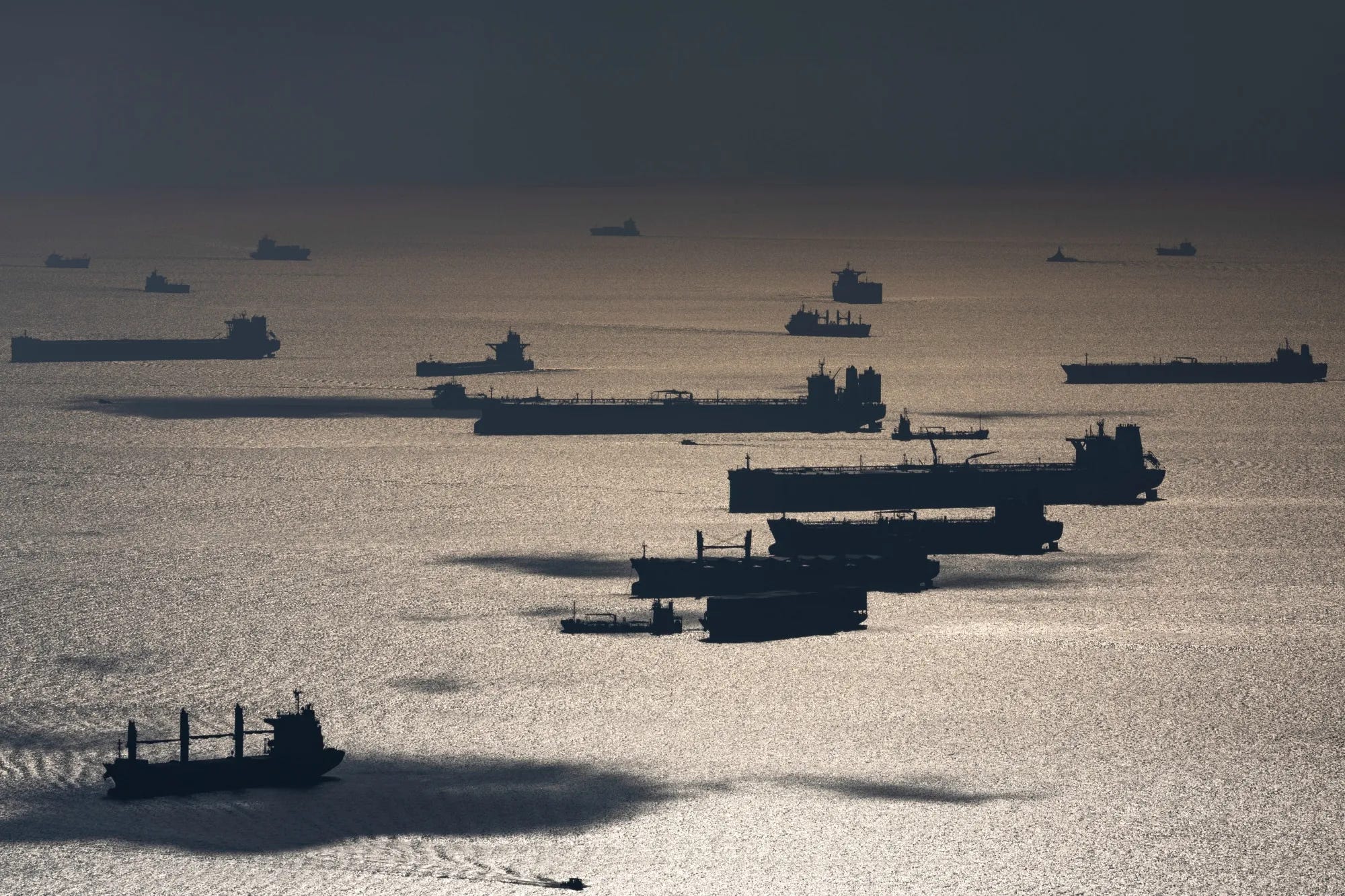
Trouble is brewing in the English Channel. This week the Royal Navy undertook a shock capture of a Russian ‘shadow fleet’ tanker carrying oil cargo across a secret supply chain. The day after the operation, a Russian frigate fired warning shots at a British civilian yacht sailing too close to it on the Channel, in an audacious standoff mere metres from British waters.
The Navy operation was conspicuously instigated on the back of the resignation of both Defence and Army ministers from Keir Starmer’s cabinet over a dispute with the Treasury’s military budget, expressing concern with the paucity of funding in the midst of an increasingly volatile world. Russian shadow fleets have been freely using the Channel for the country’s vital oil trade since sanctions were first imposed in 2022, the recent operation marking the first time in those four years the UK has intervened. The recent warning shot also sheds light on the actual Russian navy’s own use of the waterway. Between March and April four Russian military vessels escorted a lander through British territory unchallenged, and around the same time a Russian Akula-class attack submarine was spotted undertaking an undersea infrastructure mapping operation alongside several deep-sea spy vessels. The recent British operation was touted as a display of strength despite the cabinet resignations, but they have in actual fact exposed the tremendous vulnerabilities of British waters.
The Royal Navy formally possesses a measly 6 destroyers and 7 frigates, but it is estimated only half as much are actually ready for deployment. There will soon be more than three times as many British-designed frigates serving in foreign navies than in the Royal Navy. The Royal Navy only has two aircraft carriers in operation, both of which are in need of severe long-term maintenance which could put them out of service for years. Neither are sustainably battle-ready. There are currently 40 admirals serving in the Royal Navy, meaning more than half are serving without a ship. The Russian Navy, in contrast, boasts between 220-230 active vessels, on top of an impressive submarine fleet of between 60 and 66. British submarines number a total of 10, only a handful of which are ready for deployment.
That Russian submarines have only recently been spotted undertaking deep-sea spying on British undersea infrastructure, vital pipelines which carry oil, liquid gas, and internet and telecommunications lines, should give the government pause for thought - but the political difficulties at home seem to have pushed Starmer to make a more decisive, if hollow, display of military willingness. This week the new Defence Secretary announced further support for Ukraine in the potential use of British-enriched uranium to help provide cheap energy for the embattled nation. It is furthermore unclear to what extent the British military were involved in supporting the recent devastating drone strikes on the Moscow oil refinery.
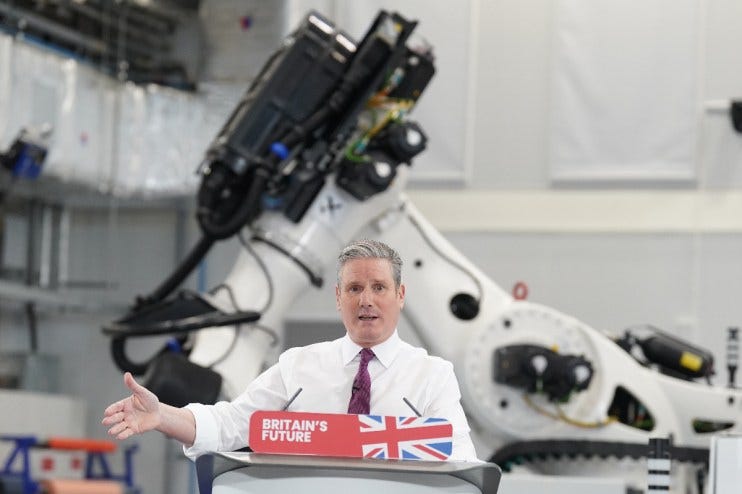
Starmer’s premiership itself is under threat after potential leadership contender Andy Burnham achieved a decisive victory at the recent Makerfield by-election. Burnham has eyed up major reforms to the Treasury, with his supporters in the Labour Tribune group floating the idea of bringing the Treasury’s powers into Number 10. Perhaps a further indication of Burnham’s desired trajectory comes with the recent appointment of heterodox economist Andy Haldane to his political team, who has been outspoken in his criticism of the ‘Defence Investment Plan’ as ‘too little, too late’, proposing instead a radical reorganisation of the British military economy alongside the issuance of war bonds and cleavage of the Treasury into a financial watchdog and an ‘Economy Ministry’ to help provide the vital financing and material solidity the British military needs.
One does, however, get the sense that ‘too little, too late’ may be the story for the military altogether, and not just Starmer’s investment plan. It will take years for out-of-service fleets to become operational again regardless of Treasury financing, let alone the extended timeframe needed for domestic redevelopment of vital warship manufacturing industries. The clock is ticking all around the UK, as the Russian Navy procures levels of strategic and military advantage over the island that look to render any attempt at defensive hostility a suicide mission for Britain. Can a naval ‘bee-network’ really stand a chance against the Russian war machine?
Sovereign AI: US v EU v UK
European sovereign AI initiatives have been given a jolt of urgency this week after the latest Anthropic AI model ‘Fable 5’, considered to be the most advanced available, was restricted to US-only use by the US government over fears over cybersecurity. The decision marks the first major intervention in model dissemination as the AI race starts to produce increasingly powerful agents that may be capable of overriding some of the most complex cybersecurity mechanisms. It also serves as yet another painful reminder that Europe’s dependency on American generosity is no longer sustainable.
Financiers and technology developers have been pursuing sovereign AI options for the last few months now, with our first reporting on the proposals as they were last month (see INDEX 7). At that time we were sceptical of the initiative, grounded as it was in a persistent dependency on US data infrastructure and reflecting a similar tendency in the UK for preferring general investment incentives and stifling regulative bureaucracy over direct implementation and machine-pace efficiency. It would appear that EU officials are keen readers of the INDEX, as the latest push, spurred on by US coldness to the bloc, seems to be taking on the bulk of our recommendations!
German firms Celonis and Deepset have announced a combined effort, with support from the EU, to develop a sovereign OS network to allow for a consistent single-platform integration across EU member-state public bodies, coordinating vital infrastructure, military, and social service data into a single, streamlined system. Deepset’s Haystack framework, which will form a core component of the system, will directly integrate governance and compliance procedures into agential decision-making protocols, overcoming our initial scepticism over human over-intervention. The model would furthermore rely on a peer-to-peer network, circumventing dependencies on US data infrastructure to maintain total sovereignty for the system.
There is no such initiative taking place in the UK. As reported on last issue (see INDEX 9), Britain’s sovereign AI initiatives have largely remained concentrated in state-sponsored financing incentives, with small-scale agents being proposed to maintain social cohesion above anything else - policing the growing numbers of unemployed and undereducated, whilst providing the very investment frameworks necessary to offload workers under the auspices of automation. The recent announcement of a social media ban for all aged 16 and under will have the compounding effect of rendering young people entirely dependent on AI educators whilst AI policing systems track the identities, web traffic, and geolocations of all British internet users. No infrastructural effort appears to be in the woodwork, with Palantir contracts recently being implemented across the British state, where EU members like France have issued a blanket rejection of all US tech contracts for sensitive state information.
The UK plays itself up as a centre of AI innovation, and indeed the R&D capacities of tech firms in this country are world-renowned for a reason. But in terms of actual domestic implementation or trickle-down, our entire AI infrastructure is entirely dependent on US firms and remarkably underdeveloped in actual capacity. Where complex governance protocols are being hardwired into the AI networks on the continent, the philosophy of managed decline is being hardwired into networks here, with the expectation of continued stagnation and social disorder positioning sovereign initiatives into prison sentences for the British citizenry.
Automated Warfare
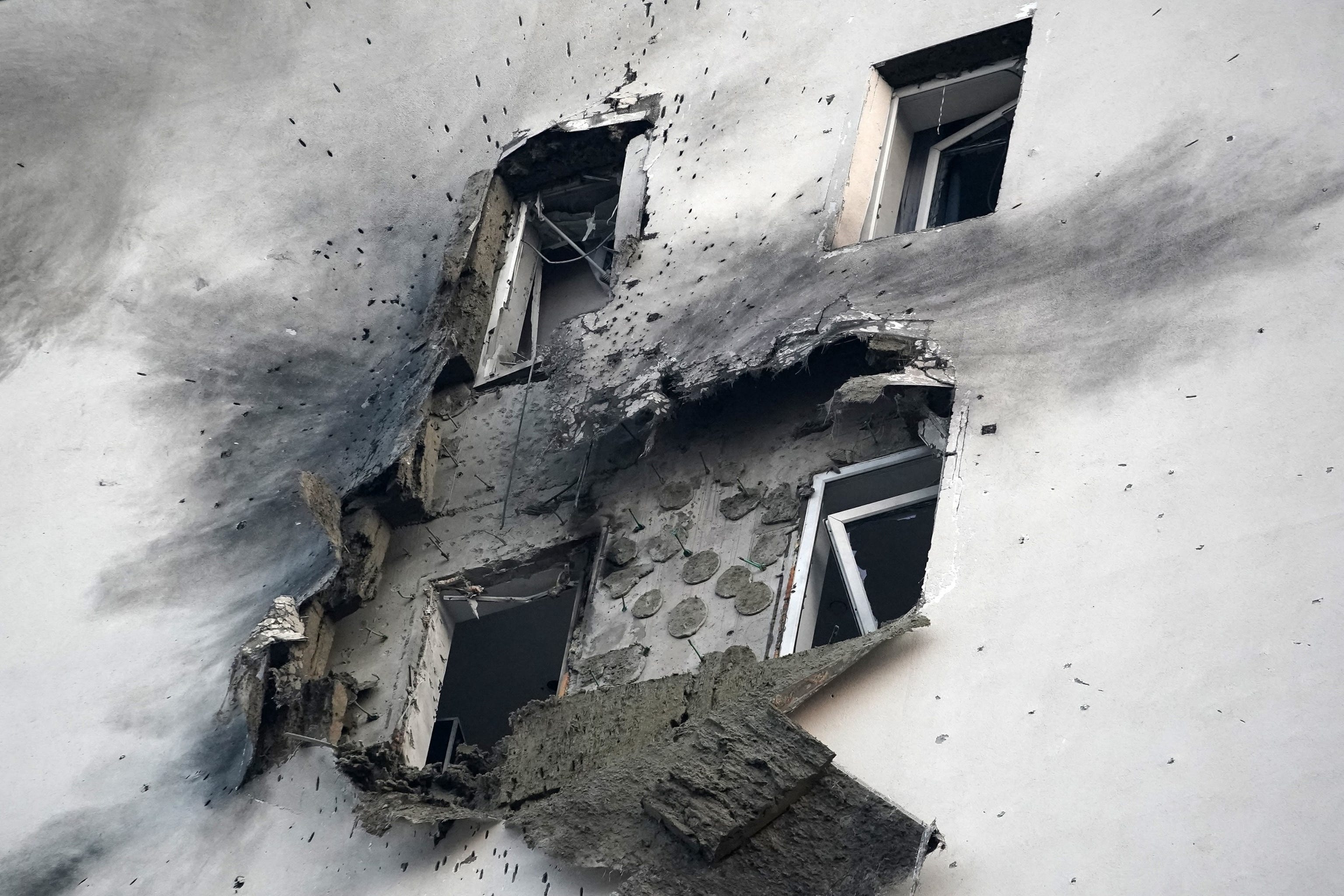
500,000 hours of drone footage taken on the Russo-Ukrainian front has been catalogued for dissemination by US AI and data-labelling firm Enabling Intelligence, in an unprecedented breadth of object analytics capable for AI and military training for US, Ukrainian, and NATO defence contractors.
This massive library of labelled data is expected to have revolutionary consequences for military organisation, as target identification, drone interception, and intelligence, surveillance, and reconnaissance (ISR) functions can now not only be automated, but overstep the entire range of jamming frequencies that have been so heavily invested in by militaries like Russia’s in recent years. Rapid, hyper-accurate lethality of the type we saw glimpses of in the recent conflicts in the Middle East will now be commonplace for the US military and the partners it continues to share its intelligence with.
We have already seen this type of predictive technology in use by the US through firms like Palantir, which developed controversial facial-recognition systems to help predict the movements of military targets without human oversight - a software which has raised concerns about the legitimacy and reliability of target identification in recent conflicts and the security of sharing vital citizen data, like medical information in the NHS, with Big Tech.
The AI hype itself looks increasingly to be a state-incentivised military procurement and financing programming, the envy of John Healey and Andy Haldane, funneling buckets of private finance into speculative R&D that, regardless of actual market value (note the rather underwhelming insights monitored in INDEX 8), will provide an astonishingly powerful range of military infrastructure capable of maintaining American dominance against the tide of history. America did not lose the war in Iran, it made a major miscalculation on potential outcomes of intervention, and realised later on that the tangible gains to be made in further investment into the conflict were insufficient, and so found an off-ramp.
And as for the UK? Well our fortunes and position in the world seem much closer to that of Cuba than Europe, or even Iran. Without any tangible sovereign infrastructure to speak of, and immense vulnerabilities toward an increasingly hostile Russia, and besides a Europe that we had grown apart from long before the Brexit campaign was started, our capacity for transformation seems entirely pinned to US geopolitical interests. As voluntary participants in one of the most invasive and totalising military projects ever conceived, Project Maven, the argument for British sovereignty seems at best a cultural folly, and at worst a death wish. In short, Andy Burnham is truly the revolution personified.
INDEX Verdict
Despite the fragile peace in Iran and the reopening of the Strait of Hormuz, the Q3/4 price spike in basic essentials is still headed straight for British consumers. With energy shortages and increasing vulnerability to a military giant in our backyard, we Brits can feel some comfort in sharing our experience of the coming era with our comrades in Cuba. As islands on either side of the pond, it seems highly unlikely to expect transition here without a transition first in Washington. What is left to us is the power to build networks of local, small-scale infrastructure, liaise with our comrades in the States, and try to influence the engineers and control room operators that possess the keys to the machine to pursue their tangible political interests.
"Same goes for the socialist movement, that which seeks nothing less than the full sovereignty of the working class, which have become, in Britain, nothing but a tiny moment of a global network of logisticians and engineers dictating the movement of goods and credit, and who, acting on their own, are like flies in a cobweb." Great recognition. This is my main objection to most left wing movements in Europe, they lack the understanding of contemporary globalisation and its effects on the bargaining power of labour. In a not so unusual contradiction, while globalisation is the primary process disempowering the working class in contemporary capitalism and the motor of modern geoeconomic imperialism, an internationalism in the form of integration of jurisdictions is the only way to resolve this contradiction. Short of an actual deglobalisation, which seems unlikely to me. Most critical analysts don't understand the implications of weaponized interdependence. Perhaps this is something to be theorized further.
But that immediately also relates to your point regarding the UK becoming the 51st state. It is actually very convenient for this gray zone of hierarchy to exist. Why would you want a formal empire when you can have an informal one, where you push away the responsibility of management but extract the benefits of control?