


This week:
SpaceX reaches world historic heights at NYSE.
UK Gov seeks to automate jobs and jobseekers alike.
Rhenus outlines the future of automated logistics.
Class leverage diminishes as determinate work shrinks.
We’ve been enjoying reading and engaging with Geese Magazine from across the pond this week. Though there are undoubtedly key disagreements we have with some of their output, it is encouraging to see their efforts to push the breadth of discussion beyond the dogmatic back-and-forth that has characterised so much debate in the past few decades. You can read our responses here: Ascholia/Schole & Proletarian Minority.
An experience our American readers may not share with us here in the UK is that of the somber ritual of going to the JobCentre Plus. It is a profoundly British affair to take a grey morning stroll to an international-style cube in your local ghost town to sit in a 30 year old, bright green office, surrounded by security guards to tell your ‘work coach’ how long you've spent scrolling on job listing websites. A deep sense of frustration and shame has you look across the desk at your dull-eyed patron and think ‘Well it's alright for you, ain't it?’
Well that misplaced envy may be having its spiteful last laugh, as the government plans to ‘complement’ their work coaches with a new AI coach that can remind the unemployed they aren't to have any leisure time, 24/7, everywhere they go. Good news for our rationeers, as they'll be well ahead of the training programmes required to use the software when it's their turn to make an account!
As our intrepid entrepreneurs go to bank their trillions in New York, we too should take pains to complement them and their hard work, despite our key disagreements on their output – that is, after all, what workers should do. So, a compliment fitting for the times:
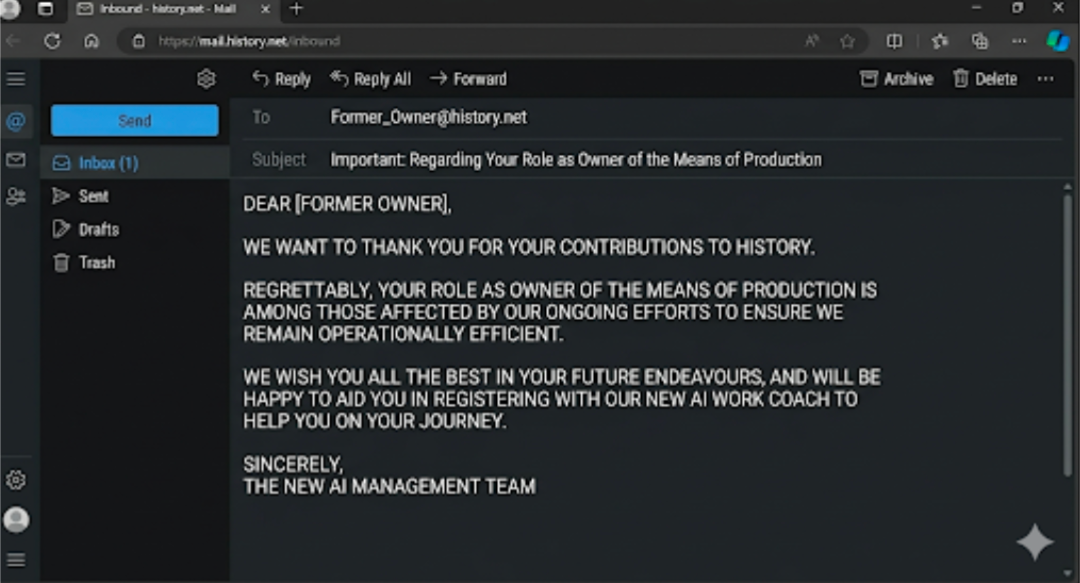
That should hopefully get us a retweet by SpaceX.
— S.E.P.
SpaceX Valuation (& ‘Universal High Income’)

It's been a tumultuous week for markets as pressures from all angles weigh down on investor confidence. All eyes had been focused on the coming SpaceX IPO, which saw the ticker SPCX valued as the highest-priced stock option in financial history. SPCX has so far avoided major shorting as was feared by some investors, but the massive valuation of the company and preceding market choppiness is indicative of investors’ turning stomachs.
Whilst SPCX has seen an extraordinary surge in prices and markets have seen a rebound as of Friday, it should be noted that all is not as it seems. The sell-offs over the week also saw large purchases of yen and spikes in other currency markets, suggesting that not all investors are confident in the long-term viability of SpaceX’s current valuation. The Warren Buffet Indicator has repeatedly stressed the major overvaluation of SPCX, and many retail investors have expressed reluctance to act as potential liquidity in a major sell-off once the IPO sales close.
Attitudes towards AI investment have also shifted dramatically over the last week, with stock markets responding to increasing scepticism from business about immediate ROI for implemented programmes (see INDEX 8). Oracle stock has seen a tumble of nearly 16% on the NYSE, despite meeting its financial targets, after it announced plans to raise a further $40bn for data centre development.
Before the SpaceX IPO, Elon Musk had incorporated his xAI company into the firm in order to help bolster his deeply unprofitable Grok system. Of the myriad businesses incorporated into SpaceX, only its Starlink satellite programme is profitable, with the IPO supposedly introduced to raise capital for 100,000 new satellite launches in the coming year, as well as to help support their involvement in NASA’s Artemis project.
The grace period on Friday was greatly helped by the decision of the US government not to go ahead with strike action announced against Iran, with conspicuous timing for the decision being made at the time of the IPO and start of the 250th anniversary celebrations for the founding of the United States.
The picture from markets seemed stable at the end of the week, but deep insecurity in AI and consistent geologistical bottlenecks from the ongoing war in Iran, despite ceasefire, suggest we are far from escaping the ‘frothy’ volatility that has characterised the global economy in 2026. As inflation continues to rise in the US, with Trump remarking he ‘loves inflation’, this persistent volatility can only serve to continuously weaken the dollar and the long-term stability of Western credit.
(Note: In other news, during an interview with Peter Diamandis on 11 June, Musk predicted that through the development of the present AI/robotics-led transformation of the economy that the age of “universal high income” looms on the horizon: “We’ll basically just issue money to people… AI and robots are going to make so much stuff and provide so many services that they’ll run out of things to do for humans” and that "Money will stop being relevant at some point in the future." As the old adage goes, to be rich is glorious; that a more succinct elaboration of Communism comes from our trillionaire comrade and Rupert Lowe advocate is by the by. I’ll simply refer the reader to Cde. Jehu’s comments on the matter. – L. Luria)
‘Kill the Work Coach in your Pocket’

The first AI Adoption Summit was inaugurated at London Tech Week this week, bringing developers and investors from around the world to capitalise on the city’s growing tech sector. Prime Minister Keir Starmer made several key announcements at the summit regarding the government’s push for sovereignty in the sector. The programmes announced by the prime minister were primarily focused on attempting to balance the industrial impacts of AI rollout on the UK’s labour market, seeking to fight fire with fire regarding the new technologies.
£200mn were pledged at the summit for a TechFirst programme that introduce AI training at schools and introduce a new Level 3 AI Apprenticeship to increase worker competency, as well as access to several free introductory programmes for software run by firms like Google, Amazon, and Microsoft. A new ‘AI and Future of Work' unit has also been put together to help oversee workforce security in the AI transition.
An Early Careers Job Alliance was also announced, which will bring tech employers together with the government and trade unions to attempt to reshape the nature of entry-level roles, which are seeing rapid automation in their traditional forms across the job market. Whilst tech leaders like Sam Altman have condemned ‘AI-washing’ by firms to excuse layoffs, the increasing impenetrability of the job market for untrained young people is having significant effects on generational career ladders. Around 13.5% of young people are unemployed NEETs, amounting to over a million people, many of whom will be reaching their 30s before major initiatives are scaled correctly. This week the Confederation of British Industry (CBI) downgraded its labour market estimates for the UK to predict an unemployment of 2.2mn people (5.5% of the population) by 2027.
For those without work at present, the government also announced the rollout of a ‘JobCentre in your pocket’, an AI assistant that would help jobseekers with CV drafts, job applications, and interview preparation. With AI tutors also announced to help disadvantaged students catch up with their privately-tutored counterparts, the government has effectively laid out a lifelong intimate engagement with younger generations and AI tools, from exam to interview, free school meals to dole.
Logistics Automation

Global logistics giant Rhenus has laid out its vision of the future of the industry, as AI seems shaped to transform supply chains in the near future. The firm described what it called a ‘Logistics Command Centre’ (LCC) model for future logistics operations, comparing the future approach less in terms of warehouse and distribution operations and more of ‘air traffic control’ provisions.
Looking to AI capacity for not just supply chain planning and management (see INDEX 7), but machine-integrated warehouse operation, Rhenus sees a near-term reality of autonomous warehouses and automated freight lines requiring little to no front line labour force. Instead, specialised operational experts with systems training are expected to oversee the autonomous supply chains from these LCCs, intervening only when anomalies are noticed in the system, and presumably reliant on outsourced labourers to amend systems when need be (a system that the recent Time Block proposals by the Portuguese Labour Ministry would be prime labour regulations for, see INDEX 8).
The LCC framework comes as 18 EU member states have signed a Joint Declaration of Intent regarding Automated Vehicle (AV) regulation and rollout for cross-border freight and cargo within the bloc. AV technology has taken off in recent years, with Volvo Autonomous Solutions expecting to begin automated freight trials in Q1 2027, with full commercial rollout aimed for 2028.
Although Rhenus insists that the LCC model is intended to ‘complement, not replace’ human labour (a catchphrase now for the myriad industries considering AI implementation), it is highly unlikely that skills transfers will be effective in turning career drivers and warehouse operatives into complex systems analysts. The numbers don't add up on a broad scale either: will the large-scale workforce of thousands of packers, operators, drivers, and administrators all find space in an LCC office? No. But the labour cost reduction afforded by LCCs combined with hyper-complex supply chain planning (see INDEX 7) is the only possible direction capital can take.
Strikes at Sellafield
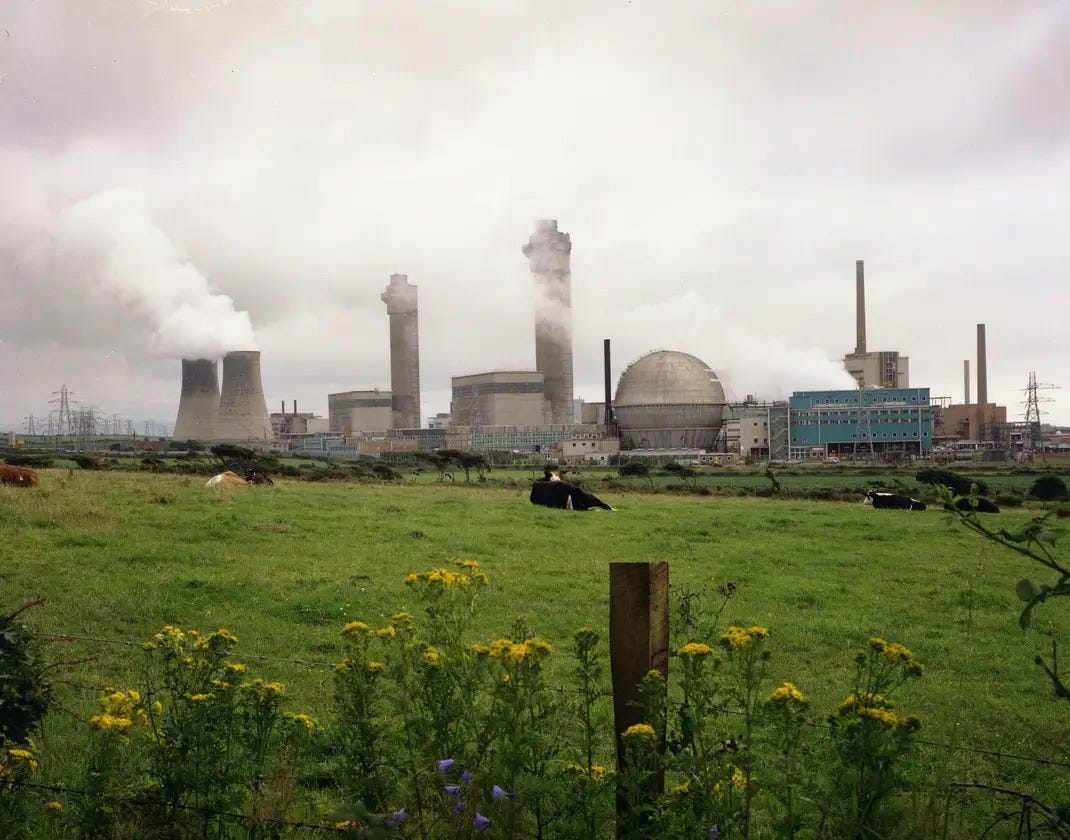
2,000 specialist workers will go on strike this month at the Sellafield nuclear plant in Cumbria over a pay dispute. Pay rises have been seen across the sector, but Sellafield workers were not included in a like-for-like pay increase by their contractors. More trouble for the energy sector, where workers are farther away than most from the prospect of being automated.
The strike action is a typical example of the determinate working class using their peculiar leverage of withdrawing labour to exact fairly local demands (see our recent article Proletarian Minority on how this traditional class is growing smaller and smaller). In a recent report from the latest Unison conference, SPEW lamented this tendency:
“Unfortunately, on the whole, this year’s conference agenda fails to present delegates with serious options for building a national strategy to fight. While it’s true that the leadership is moving the union onto an ‘organising’ agenda – aiming to build strength through industrial campaigns as opposed to a union that just excels at individual representation, services and lobbying politicians – there is still a reliance on doing this branch by branch.”
Indeed, the trade union movement has retreated into the small pockets and quick struggles wherever it can, as overall sector leverage and balloting power has diminished over the years. As recent polling suggests that union memberships are increasingly leaning towards right-populist perspectives, we also face the peculiar condition of a mass trade union movement composed of workers who abhor the notion of striking altogether. But this would appear to be par for the course as the determinate leverage of their membership diminishes and their sense of empowerment is increasingly replaced by narratives of national, sectional, or ethnic pride.
Meanwhile, those few 8% with remaining leverage look set to focus their ambitions at making loadsamoney. Solidarity, comrades.
INDEX Verdict:
As capital continues its frantic dance of speculation and paranoia, forcing governments to put together patchwork solutions for their endemic failures, the world on the ground is changing. As the leverage of the masses vanishes into thin air beneath the brutal machinery of the modern age, we can but look on and insist that in peasants revolts there will be no solution. Where there will be a solution, however, we do not know.
Wow, just discovered this publication by chance and I'm positively suprised by the quality of writing. There are too little non-liberal left wing econ/finance publications on this website. How did this publication come about?
Haven't had the chance to read much yet but I will keep following for sure.
Keep it up, and greetings from the Netherlands.